Skate Dog Design Review: Embroidering Skateboarding Charm
First Glance: A Design That Moves
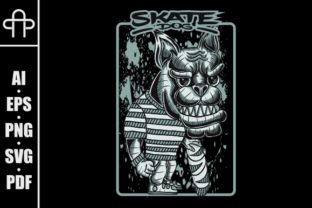
When I first opened the Skate Dog file, I wasn’t just looking at a static illustration. The shape itself has motion. A dog balanced on a skateboard, tail up, ears flapping—it’s a snapshot of pure, slightly reckless joy. You can almost hear the wheels on pavement. As an embroidery designer, I immediately started thinking about thread textures, fabric choices, and where this would land in a real product lineup. The mood is playful, a little nostalgic, and surprisingly warm. It’s the kind of graphic that makes people smile before they even notice the stitching quality.
The file comes as a clean set of design assets: AI, EPS, SVG, PDF, and a PNG. That means I have full vector control for resizing without losing crisp edges, and the PNG gives me a quick preview for mockups. Since it’s listed under Illustrations and Graphics, this isn’t a pre-digitized embroidery file. You’ll need to convert it yourself or send it to a digitizer. That’s a step I actually prefer—it gives me complete control over stitch types, density, and underlay for different fabrics.
Where Skate Dog Truly Shines in Embroidery Projects
I mentally test every design by imagining it stitched on real products. Skate Dog lands beautifully in the casual, everyday-wear space. Think custom sweatshirts, tote bags, and baseball caps. The rounded, slightly cartoonish dog silhouette reads well from a distance, and the skateboard adds just enough edge without being aggressive. For a client who runs a small dog-themed boutique, I could see this as a signature embroidered patch on denim jackets or a playful accent on a kitchen towel for a dog lover’s gift set.
I recently needed a design for a personal project—a custom tote bag for a friend who rescues dogs and skateboards with her terrier. Skate Dog was the obvious choice. I visualized it centered on a natural canvas tote, stitched in a warm charcoal thread with a muted red collar accent. The shape lent itself to a medium hoop size, around 5×7 inches, without feeling cramped. The design’s personality instantly upgraded the bag from simple tote to a conversation piece. That’s the kind of giftability that makes a handmade product feel intentional and boutique-quality.
Apparel and Beyond: Matching the Design to the Product
On apparel, I’d lean toward sweatshirt embroidery placed on the left chest for a subtle branded look, or full-front on a kid’s tee. The design has a soft, rounded feel that works especially well on baby clothes or nursery decor—imagine a tiny onesie with this dog on a mini skateboard, stitched in pastel threads. It’s sweet without being saccharine. For hats, the design would need careful placement on the front panel; the dog’s upward gaze and the skateboard’s angle create a natural upward motion that suits a structured cap perfectly.
One of my favorite use cases is the printable mockup angle. Because the file includes a high-resolution PNG, I can drop it into product photos for my Etsy shop before I even stitch a single sample. That helps me gauge customer interest and build listings faster. Skate Dog has that instant recognition factor—people see a dog on a skateboard and they know exactly who it’s for. That clarity is gold for small shop products and craft business branding.
Practical Checks Before You Stitch
I never trust a design file completely until I’ve done a few real-world checks. Skate Dog has some details that deserve attention. The dog’s face, paws, and the skateboard wheels are essential to the personality, but they’re also the places where stitch density can get tricky. If I digitize this with too much fill in a small area, the thread will build up and distort on softer fabrics. I always test on a scrap of the actual fabric first—a medium-weight cotton twill for a tote, or a French terry for a sweatshirt—to see how the details hold up.
- Check thread color contrast: The dog’s body and the skateboard need to be clearly distinct. On a dark garment, a light gray dog with a darker skateboard reads well. On light fabric, reverse the values.
- Review stitch type choices: For the dog’s body, a smooth satin stitch can give a sleek, almost patch-like finish, while a light fill stitch with a subtle texture adds warmth. The skateboard wheels might benefit from a simple running stitch outline to keep them crisp without bulk.
- Confirm hoop size: The design scales well, but I’d avoid dropping it below 4 inches wide. The dog’s snout and the tail tip can become muddled in tiny hoop sizes. For a delicate cap front, I’d test at 2.5 inches and likely simplify the linework slightly.
- Watch for fabric texture: On textured fabrics like a thick knit or a waffle-weave towel, some of the finer details might get lost. I’d use a heavier underlay and choose a slightly thicker thread to keep the design readable.
- Stretchy fabric caution: On stretchy fabric like a performance tee, a cutaway stabilizer is non-negotiable. The design has solid areas that could pucker without proper support.
Dark Fabric, Light Fabric, and the Monochrome Test
I always run a design through a black-and-white mockup to see if the silhouette holds up. Skate Dog passes this test cleanly. The dog’s shape is distinct, and the skateboard adds a low horizontal line that anchors the composition. On dark fabric, I’d avoid thread colors that are too close to the background—a charcoal thread on a black hoodie vanishes. A wheat or oatmeal thread with a pop of teal for the collar makes the design sing. On light fabric, I can get away with a monochromatic palette, maybe a soft taupe for a sophisticated, minimalist look on a linen pillow cover.
The Emotional Pull of Skate Dog in a Handmade Business
Let’s talk about the customer. When someone buys a handmade product with an embroidered design, they’re buying a feeling. Skate Dog delivers a specific emotional blend: it’s quirky, active, and deeply affectionate. I’ve noticed that dog designs with a human-like activity—like skateboarding—tend to spark a stronger connection than a simple pet portrait. It’s not just “a dog”; it’s a dog with a hobby. That makes it a fantastic personalized gift for anyone who skates, loves dogs, or just appreciates whimsical street-style art.
For Etsy sellers and craft fair products, this design has a built-in storytelling angle. I can list a “Skate Dog Embroidered Tote Bag” and naturally include keywords about dog lovers, skater gifts, and quirky accessories. The design’s visual clarity helps it stand out in thumbnail photos, which is crucial for buyer engagement. A well-stitched Skate Dog on a structured tote bag looks shop-ready, not like a hobby project. That perceived professionalism directly impacts customer trust and repeat sales.
Brand Consistency and Multiple Products
I appreciate designs that I can build a small collection around. Skate Dog works on a set of tea towels, a matching apron, and a pillow cover for a cohesive shop drop. The design assets make it easy to create coordinating printable mockups for the whole line before I invest in stitching. The vector files let me extract the dog silhouette alone for a subtle applique design on a baby bib, while the full illustration becomes the hero piece on a sweatshirt. That flexibility helps a small shop product lineup feel intentional and branded.
Where I’d Use Extra Care
Not every surface is a good match for Skate Dog. Curved surfaces like the front of a low-profile baseball cap can warp the skateboard’s straight line, making it look bent. I’d use a placement guide and likely test on a sacrificial cap first. Layered garments with seams or zippers near the stitching area can cause the needle to deflect, so I’d always position the design away from heavy seams. For items that need frequent washing—like a kid’s everyday hoodie—I’d choose polyester thread and a soft backing to prevent the design from becoming stiff after multiple cycles.
If the design included tiny lettering or extremely fine lines, I’d worry about legibility, but Skate Dog relies on shape, not text. That’s a relief. The only potential trouble spot is the dog’s eye and the skateboard’s wheel details. At full scale, they’re charming. Shrunk too small, they can turn into blobs. I always inspect small details under magnification after a test stitch. If I’m offering this as a commercial embroidery design for other makers, I’d include a recommended minimum size and a note about thread choices.
Licensing and File Use
The file set includes industry-standard formats, which is great for design flexibility. Since I’m not given explicit license terms, I always confirm whether I can use the digitized embroidery for finished products I sell, both in person and online. Most illustration packs allow it, but I never assume. I check the creator’s terms before stitching a single item for a paying customer. That’s a non-negotiable step before I call any design “ready for business.”
Final Practical Notes from the Stitching Table
I’ve walked through my usual pre-production checklist with Skate Dog, and here’s what I’d tell any fellow embroidery designer, crafter, or small business owner:
- Test on scrap fabric first, especially if you’re trying a new thread brand or a blended fabric. The design’s charm is in the details, and you don’t want to discover a density issue on a finished garment.
- Play with thread colors beyond the obvious. A muted mustard dog on a navy background feels modern and fresh; a bright coral skateboard on a gray tee pops beautifully.
- Use the right stabilizer for the fabric. A medium-weight cutaway for knits, a tear-away for woven cottons, and always a water-soluble topper for towels or anything with a pile.
- Consider an applique version if you want a faster-stitching, high-impact look. The SVG and AI files make it easy to isolate the dog’s body for a fabric applique, with embroidery details on top.
- Don’t skip the mockup. The PNG file is your friend for listing photos, but also for showing clients a preview. A realistic mockup of Skate Dog on a tote bag or a snapback can close a custom order before you stitch a single thread.
Skate Dog isn’t just a cute graphic. It’s a design with enough personality, movement, and emotional warmth to carry a handmade product on its own. Whether you’re stitching a one-off personalized gift or building a new collection for your craft business, this design has the kind of quiet confidence that makes a finished product feel like it was always meant to be there. Just do your due diligence on the digitizing side, test your fabric and thread combination, and you’ll have a piece that makes people stop scrolling and smile.