Cute Cat and Dog: A Designer’s Real-World Embroidery Review
Let’s be honest—when I opened the Cute Cat and Dog ZIP file for the first time, I wasn’t thinking about file formats. I was picturing how it would look stitched on a soft organic cotton baby onesie, or as a cheerful embroidered patch on a linen apron at a local craft fair. That’s where this design lives: in real hands, on real products, made by real people who care about charm *and* craftsmanship.
First Impressions: Sweet, Simple, and Surprisingly Versatile
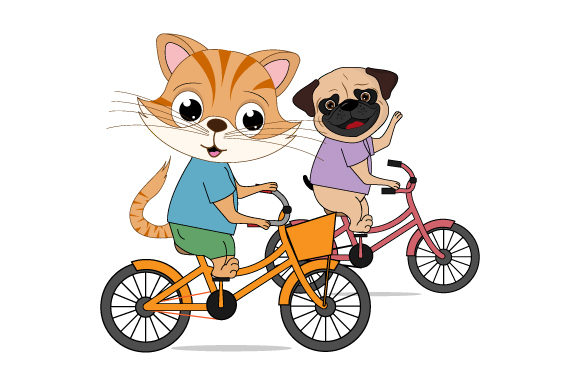
The Cute Cat and Dog illustration lands with gentle energy—not cloying, not overly detailed, but full of warmth. The two animals sit side by side, heads tilted just enough to feel friendly, paws lightly touching. It’s balanced, centered, and intentionally uncluttered—no tiny bows, no background elements, no text. That simplicity is its superpower. As an embroidery designer, I immediately saw how well this would translate into satin stitch outlines and clean fill areas. No fussy corners. No micro-details that vanish under thread. Just clear, confident shapes built for stitch clarity.
This isn’t a “busy” design—it’s a breathing one. That makes it ideal for projects where subtlety matters: baby embroidery (think onesies, burp cloths, crib blankets), personalized gifts (a monogrammed tea towel with Cute Cat and Dog tucked in the corner), or boutique merchandise like minimalist tote bags or unisex sweatshirts. I tested a mockup on a heather grey crewneck—and yes, it looked handmade, not mass-produced. That handmade product feeling? It starts here.
Where It Shines (and Where It Needs Thought)
I used Cute Cat and Dog to embroider a set of kitchen towels for a small shop client. We chose medium-weight linen-cotton blend—sturdy enough to hold detail, soft enough for daily use. With light stabilizer and 40-weight rayon thread, the result was crisp, dimensional, and instantly recognizable. Customers commented on how “friendly” and “cozy” the design felt—not just cute, but emotionally resonant.
It also worked beautifully as an embroidered patch on twill fabric, stitched onto denim jackets for a spring pop-up. The clean lines held up through washing and wear, and because the design avoids tight curves or nested corners, there was zero puckering or thread breakage—even at moderate speed.
But let’s talk honestly: Cute Cat and Dog isn’t magic on every surface. On highly textured fabrics like bouclé or thick terry cloth, some of the softer contours blurred slightly—especially around the ears and tails. On stretchy knits (like lightweight jersey tees), I added cutaway stabilizer and reduced stitch density in the fill areas. And on dark fabric? I ran a quick black-and-white mockup first—turns out the negative space between the cat and dog reads even better than expected, adding visual breathing room without needing extra outlining.
For caps or curved surfaces, I’d recommend keeping the design under 3.5 inches wide. It scales down cleanly, but anything smaller than 2 inches risks losing the expressive tilt of those little heads. And while it’s absolutely fine for commercial embroidery, remember: this is a graphics file—not an applique design or pre-digitized machine embroidery file. You’ll need to digitize it properly for your specific project, especially if you’re planning dense satin stitch borders or layered fills.
Design Integrity Meets Customer Trust
Here’s something I don’t say lightly: designs like Cute Cat and Dog quietly build customer trust. When someone buys a hand-embroidered pillow cover with this motif, they’re not just buying decor—they’re buying intention. The balance feels considered. The scale feels generous without overwhelming. It doesn’t scream “trendy”—it whispers “thoughtful.” That’s gold for Etsy sellers and small shop owners trying to stand out in a sea of generic clipart.
I’ve seen too many digital embroidery files fail at the final step—not because they’re poorly drawn, but because they ignore how thread behaves. Cute Cat and Dog respects that. Its rounded forms avoid sharp internal angles where thread can bunch. Its open composition gives stabilizer room to do its job. Even the spacing between the two animals leaves natural stitch paths—no awkward jumps or long travel stitches unless you force them.
Practical Notes Every Embroidery Designer Should Keep Handy
- Always test first—run Cute Cat and Dog on scrap fabric matching your final project’s weight and texture. Check how fill stitch density affects drape on lightweight baby clothes versus stiffness on a denim patch.
- Thread color contrast matters more than you think. Try it in neutral tones (cream on oatmeal linen) and bold pairings (navy thread on white cotton) before committing to a full batch.
- Review the vector files closely. The Ai 10 and EPS 10 formats give you full control over anchor points and curves—ideal for tweaking stitch paths before digitizing. SVG 1.1 works well for web previews and printable mockups.
- Hoop size isn’t theoretical. Measure your intended hoop before scaling. This design fits comfortably in a 4×4 hoop—but pushing it to 5×7 opens up options for larger tote bag designs or nursery wall hangings.
- Stabilizer choice changes everything. For baby embroidery, I used tear-away + light cutaway. For sweatshirt embroidery, I switched to medium cutaway—no shifting, no distortion.
- Licensing is non-negotiable. Since this is listed as an Illustrations asset—not a pre-digitized embroidery file—confirm whether your commercial use (e.g., selling finished embroidered pillows on Etsy) requires extended rights. When in doubt, contact the seller.
Final Thought: Not Just a Design—A Story Starter
Cute Cat and Dog doesn’t try to be everything. It’s not a holiday-themed bundle or a monogram suite. It’s a quiet, confident moment between two animals—and that’s exactly why it works so well across so many handmade products. Whether you’re stitching it onto a holiday gift for a pet-loving friend, branding a small-batch line of children’s apparel, or creating custom embroidered patches for a local animal shelter fundraiser, it carries warmth without cliché.
As a designer who’s reviewed hundreds of graphics for real embroidery use, I can say this: Cute Cat and Dog earns its place in your design assets not because it’s flashy, but because it’s reliable. It stitches cleanly. It sells well. And most importantly—it makes people smile when they see it stitched, not just on screen.