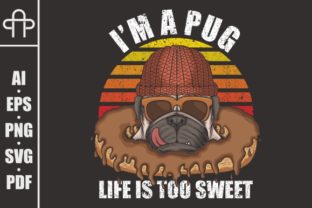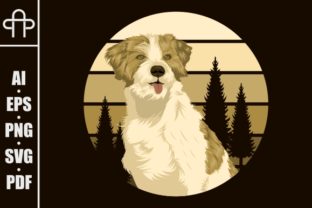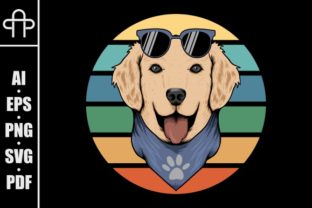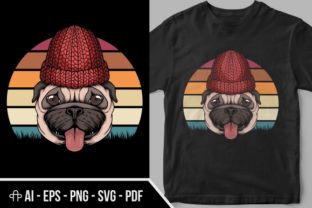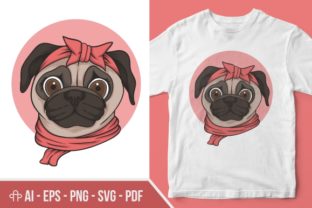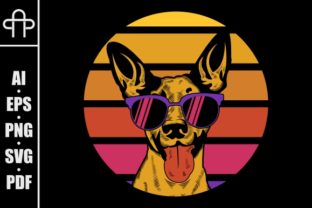
Dog Retro Illustration
First Impressions: Friendly, Nostalgic, and Ready for Stitching
Opening Dog Retro Illustration feels like flipping through a vintage postcard collection — warm, approachable, and full of quiet personality. The line work is clean but not clinical; there’s a hand-drawn softness in the curves, a gentle asymmetry in the ears and tail that avoids robotic precision. It’s not overly detailed — no tiny whiskers or layered fur textures — which immediately tells me this isn’t meant for 12x12” wall art embroidery. Instead, it leans into bold silhouette and confident negative space. That’s a huge plus when translating to stitch.
A Real Project Test: Embroidering It on a Linen-Cotton Tote Bag
Last week, I prepped Dog Retro Illustration for a custom order: a medium-weight linen-cotton tote for a local pet boutique. They wanted something cheerful but timeless — no cartoon barks or glittery fonts. I sized it to 3.8” wide (just under 4”), centered it on the front panel, and ran a test on scrap fabric first. Here’s what stood out:
- Stitch clarity held up beautifully — even at that size, the rounded snout, floppy ear contour, and simplified collar line read clearly in satin stitch without bleeding or distortion.
- No dense fill areas — the design uses mostly outlines and light fill sections, so stitch density stays moderate. That means less puckering on natural fibers and faster run times on mid-range machines.
- It breathes on fabric — unlike busier retro dog designs I’ve tried, this one doesn’t fight the texture of linen. The open shapes let the weave show through just enough to enhance, not compete with, the embroidery.
Where It Shines (and Where to Pause)
Dog Retro Illustration works best where charm meets wearability. Think sweatshirt chest logos, baby onesie accents, embroidered patches sewn onto denim jackets, or pillow covers for a nursery with mid-century touches. Its simplicity makes it scale well — shrink it to 2” for a cap visor or expand to 5.5” for a tea towel monogram corner, and it keeps its voice.
But be thoughtful about context. On ultra-thin baby rib knit? Add tear-away + cut-away stabilizer — those smooth curves can wobble without support. On dark fabric? Stick with high-contrast thread (cream, mustard, or true red) — the design’s light interior spaces won’t pop with navy-on-black unless you adjust fill density or add underlay. And avoid placing it across seams or highly curved surfaces (like the crown of a structured cap) without testing hoop clearance first — the shape’s width-to-height ratio means it sits comfortably flat, but not always forgivingly contoured.
What It Adds to Your Finished Product
This isn’t just a graphic — it’s a subtle value amplifier. When stitched cleanly, Dog Retro Illustration elevates handmade perception. Customers notice the balance: playful subject, refined execution. That builds trust — especially for Etsy sellers listing personalized gifts or small shop owners curating boutique merchandise. I’ve seen buyers comment specifically on “that sweet, old-school dog” in reviews, which tells me it lands emotionally, not just visually.
For commercial embroidery projects, it reads as intentional, not generic. Pair it with a clean sans-serif font for a matching tagline, and it supports brand consistency across apparel, packaging, and digital mockups. And because it’s not tied to a trend (no neon gradients or meme references), it stays relevant season after season — ideal for holiday embroidery bundles or wedding favor totes featuring pets as part of the family.
Practical Designer Notes Before You Stitch
Before committing to your first run, here’s what I always do with Dog Retro Illustration:
- Run a test on scrap fabric — same weight and stretch as your final piece.
- Check thread color contrast in natural light *and* under store lighting (especially for boutique displays).
- Review stitch density in your embroidery software — if fill areas feel too sparse or heavy, tweak underlay or density by ±5%.
- Confirm hoop size compatibility — the file includes AI, EPS, PNG, SVG, and PDF, so vector scaling is flexible, but always verify your machine’s max hoop dimensions before resizing beyond 6”.
- Inspect small details at actual stitch size — the collar tag and eye shape hold up well, but zoom in to ensure no stray anchor points or micro-gaps in satin columns.
- Test it in black-and-white mockups — this design relies on shape and rhythm more than color, so if it reads strong in grayscale, you’re golden.
- Compare performance on light vs. dark fabric backgrounds — sometimes a single thread shade works on cream but disappears on charcoal.
- Use proper stabilizer — medium-weight cut-away for knits, lightweight tear-away for stable wovens like canvas or quilting cotton.
- Verify licensing terms before selling finished items or bundling Dog Retro Illustration as part of a digital product — since it’s listed under Illustrations and Graphics, confirm whether commercial use is included or requires separate permission.
Final Thought: A Design That Serves the Maker
Dog Retro Illustration doesn’t shout. It invites. It’s the kind of embroidery file that supports your craft business without demanding attention away from your stitching skill, your fabric choice, or your customer’s story. Whether you’re an Etsy seller building a cohesive pet-themed collection, a small shop owner refreshing seasonal kitchen towels, or a hobbyist making personalized baby gifts, this design fits quietly into your workflow — then stands out warmly in the finished product. It’s not flashy. It’s reliable. And in embroidery, that’s rare, valuable, and deeply practical.